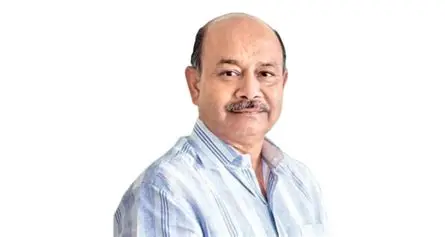
Radhakishan Damani is a veteran Indian investor and entrepreneur, best known as the founder of DMart (Avenue Supermarts). He started as a value-focused trader/investor and built a reputation for quiet, disciplined investing before building a retail business empire. His listed-equity holdings are followed closely through filings.
Frequently Asked Questions about Radhakishan Damani's Portfolio
Portfolios are updated quarterly based on the shareholding patterns filed by listed companies with the BSE and NSE.
No new stock additions to Radhakishan Damani's portfolio in Jun 2026.
No stock bought by Radhakishan Damani in the current quarter (Jun 2026).
No stock sold by Radhakishan Damani in the current quarter (Jun 2026).
Based on current portfolio concentration, Radhakishan Damani has the highest exposure to the Consumer Services sector (116687.37 Cr).
Radhakishan Damani is a veteran Indian investor and entrepreneur, best known as the founder of DMart (Avenue Supermarts). He started as a value-focused trader/investor and built a reputation for quiet, disciplined investing before building a retail business empire. His listed-equity holdings are followed closely through filings.
Classic value and discipline: buy high-quality businesses at sensible valuations, keep it simple, and hold with long-term conviction. Emphasis on strong cash flows, prudent capital allocation, and downside risk control rather than chasing short-term momentum.
The total value of tracked holdings of Radhakishan Damani is approximately ₹ 1,16,828.35 Cr (5 stocks).
Companies are only required to disclose shareholders holding >1% stake at the end of every quarter. Small trades below this threshold are not publicly visible. If a stock has not yet released shareholding data for the most recent quarter, the portfolio will reflect data from the last available quarter.